Problem Solved
Difficult Ground Conditions
Foundations for wet soil, expansive clay, bedrock, or compressible ground
The Challenge You're Facing
Wet soil causes settling. Expansive clay swells and shrinks with moisture. Bedrock prevents standard excavation. Peat and organic soils compress unpredictably. Traditional foundations require either extensive soil remediation or specialized deep foundation systems.
Wet or soft soil: Standard foundations settle as soil compresses under load
Expansive clay: Swells when wet, shrinks when dry, causing vertical movement
Bedrock at shallow depth: Excavation requires specialized equipment
Peat or organic soil: Compresses unpredictably over time
Soil replacement: Remove unsuitable soil and import engineered fill
Deep foundations: Helical piles or caissons extend below problem soil layers
Drainage systems: French drains or site grading to manage water
How BASIS Solves This
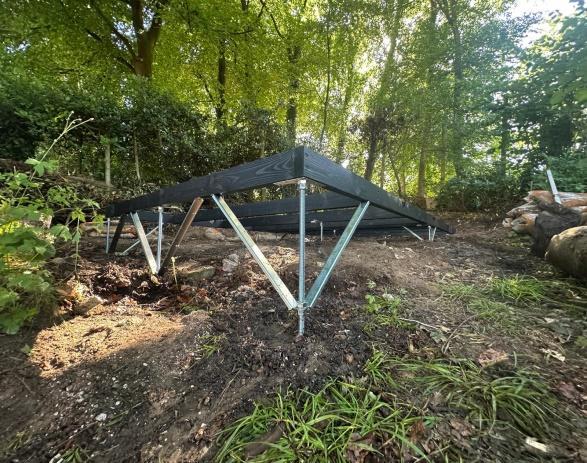
BASIS posts accommodate ground movement through adjustment. Wide base plates distribute loads to reduce settlement. Elevated design preserves natural drainage. Posts can be readjusted as ground conditions change over time.
Accommodate Ground Movement
Clay soils can shift vertically with seasonal moisture changes. Frost can heave ground upward in winter. Adjust posts with a wrench to compensate for movement rather than resisting it structurally.
Anchor to Bedrock
Where bedrock is at or near surface, drill 22mm holes and anchor posts directly to rock. Bedrock provides excellent bearing capacity. See our bedrock anchoring guide for installation details.
Load Distribution on Soft Soil
Each post has a base plate distributing load over a larger area. On soft soil, excavate shallow pits (40-50cm cube) and fill with compacted gravel under each post to further distribute load and prevent point settlement.
Maintains Natural Drainage
Elevated structure (150-600mm clearance) allows water to flow beneath building rather than pooling around foundation. Airflow under structure reduces moisture accumulation.
Adjustable on Compressible Soil
Peat and organic soils compress over time under building load. Install posts with gravel pads for bearing, then readjust heights as compression occurs during the first year.
Minimal Ground Disturbance
Installation requires small excavations for gravel pads only. No large-scale earthwork, soil removal, or imported fill required.