
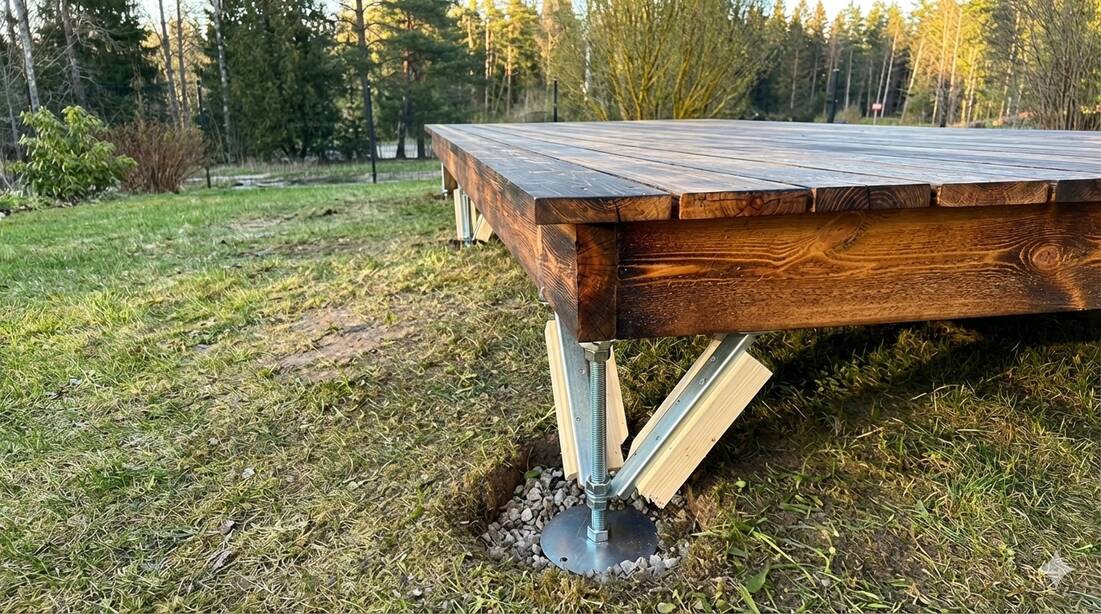
Installing Foundation Posts on Soft or Wet Ground
Published on November 5, 2025
Soft or saturated soil presents bearing capacity challenges for foundation posts. Direct placement on compressible ground can result in settlement as soil compresses under building loads.

The standard solution: excavate shallow areas at post locations and install compacted gravel pads. These pads distribute loads over larger bearing areas and provide drainage to reduce soil saturation.
This gravel pad method (sometimes called "gravel pockets") creates stable bearing points without excavating or treating the entire site.
Why Soft Ground Settles
Soil becomes soft due to:
- High water content: Saturated soil has reduced bearing capacity
- Organic matter: Peat and organic soils compress under load
- Loose structure: Uncompacted soil compresses when loaded
Concentrated loads on small bearing areas (post footplates alone) cause settlement on soft ground. The solution: increase bearing area and improve drainage at each post location.
Gravel Pad Function
Compacted gravel pads beneath posts provide:
- Load Distribution: Larger bearing surface distributes weight over greater soil area, reducing pressure per unit area
- Drainage: Gravel allows water to drain away from bearing surface rather than pooling beneath posts
- Frost Protection: Gravel does not retain water and therefore does not heave when frozen
Installation Procedure
Required materials: shovel, gravel (MOT Type 1 or 20mm crushed stone), tamper or heavy post for compaction.
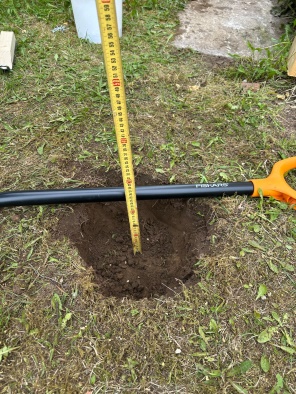
1. Excavate Pad Areas
At each post location, excavate:
- Dimensions: 300×300mm minimum
- Depth: 200-300mm (excavate until firm soil is reached; may require deeper excavation on very soft ground)
2. Fill and Compact Gravel
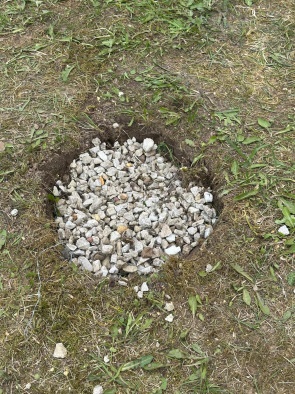
Fill excavation with gravel in layers:
- Add gravel to half-depth
- Compact thoroughly using tamper or heavy post
- Add remaining gravel
- Compact again until surface is firm and level
Proper compaction is critical—gravel must form dense, stable bearing surface.
3. Position Post
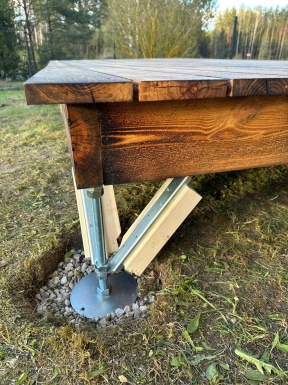
Place foundation post centered on compacted gravel pad. Post footplate distributes building load to gravel, which distributes load to soil over larger area.
Sizing for Soil Conditions
Standard soft soil: 300×300mm pads at 200-300mm depth
Very soft soil (peat, saturated organic soil): Increase pad dimensions to 500×500mm to further distribute load and reduce bearing pressure on weak soil.
Summary
Gravel pads beneath foundation posts provide stable bearing on soft or wet ground by distributing loads over larger areas and improving drainage at post locations. This eliminates the need for site-wide excavation or soil replacement.
If ground settles after installation, adjustable posts can be releveled with a wrench to restore building level without excavation or structural repair.
Questions about soil conditions at your site?
See our guide on Understanding Soil Types or contact us with site photos.