
Understanding Soil Types and Movement Before You Build
Published on October 30, 2025
When people first see our BASIS adjustable foundation system, one of the most common questions we hear is:
“How often does it need adjustment?”
That’s a fair question — because the ground itself is always moving. Whether you’re in northern Europe, the UK, or the southern coast of Spain, your soil tells its own story. Understanding that story is the real key to long-term stability.
Let’s dig in.
The Ground Is Never Still
In northern climates, the big culprit is frost. Each winter, moisture in the soil freezes, expands, and lifts anything sitting on top of it. Come spring, it thaws and settles but not always back where it started.
Where I live, that happens thirty times a year or more. Imagine lifting your entire structure up and down that many times, no wonder things shift.
Farther south, it’s not frost but wet–dry cycles that do the damage. Clay soils swell like a sponge when soaked, then shrink and crack when they dry. Same problem, different reason: the ground moves, your structure follows.
Every Soil Has a Personality
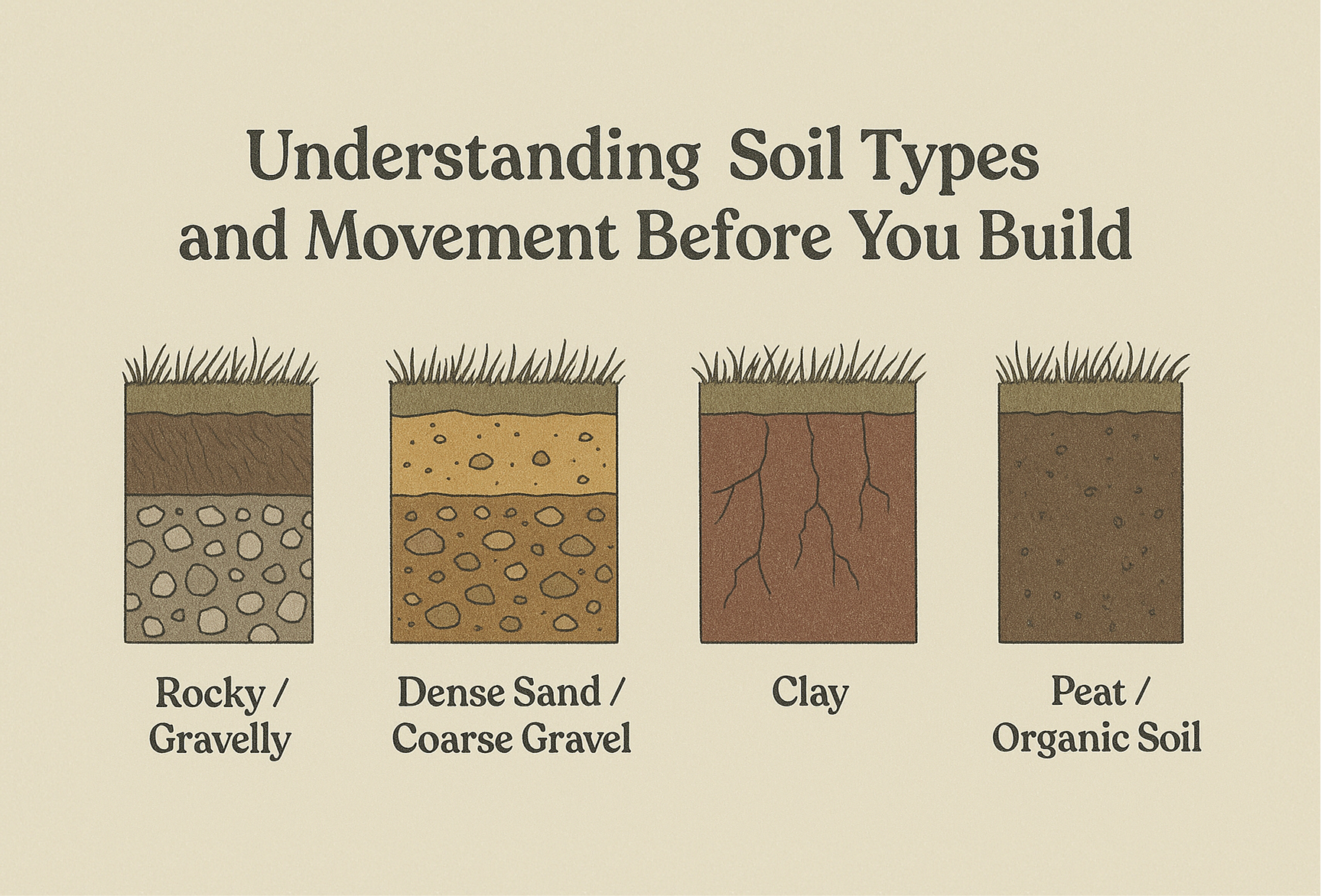
Here’s a breakdown of what you’re likely standing on and what it means for your foundation.
🪨 Rocky or gravelly soil
Lucky you. That’s the dream base.
It drains fast, doesn’t shift much, and once you’ve set your posts, they’ll barely move again.
🏖️ Dense sand and coarse gravel
Almost as good. The drainage is excellent, and compaction holds well. On sloped ground, erosion can cause a little wandering over time, so a quick check every season is smart.
🏺 Clay
This one’s the troublemaker. Expands when wet, contracts when dry, sometimes by centimeters. The trick here is drainage. Dig a small pocket under each support and fill it with compacted gravel. That layer gives water somewhere to go and keeps the structure from “riding” the clay’s mood swings.
🌱 Peat and organic soil
Soft, spongy, and unpredictable. You can’t fight it but you can reinforce it. A gravel pad under each point of load helps, and compacting it firmly before installation makes a world of difference.
Other soils like silt, loess, or fill have their own quirks, but the rule stays the same: keep water moving and compact what you can. The goal isn’t to make the ground behave perfectly, it’s to make your foundation adaptable when it doesn’t.
What About Pavers?
Many homeowners have already pavers on the ground. BASIS posts can be installed through drilled holes in the pavers, keeping the foundation fully adjustable while still offering a hard, finished surface. Sufficient hole is ~10cm deep and 22mm in diameter if the posts are on level pavement.
Strength Starts with the Ground
Each BASIS-03 post can handle 1.4 tons. They are deliberately overengineered to ensure reliability.
But even the strongest steel post can’t save you if it’s sitting in soggy soil.
That’s why prep: drainage, compaction, and the ability to fine-tune your level later matters more than pouring extra concrete or going deeper “just in case.”
The Bottom Line
You can’t stop the earth from shifting. But you can build with it instead of against it.
If you take a little time now to understand what your soil will do, you’ll save yourself from the endless re-leveling, cracked tiles, and sticking doors that catch everyone sooner or later.
That’s what BASIS was designed for: to make solid but adjustable foundations possible for anyone, anywhere.
Curious how this would perform in your local soil conditions?
Send us a message or share what type of ground you’re working with. We’ll help you find the setup for your project.