
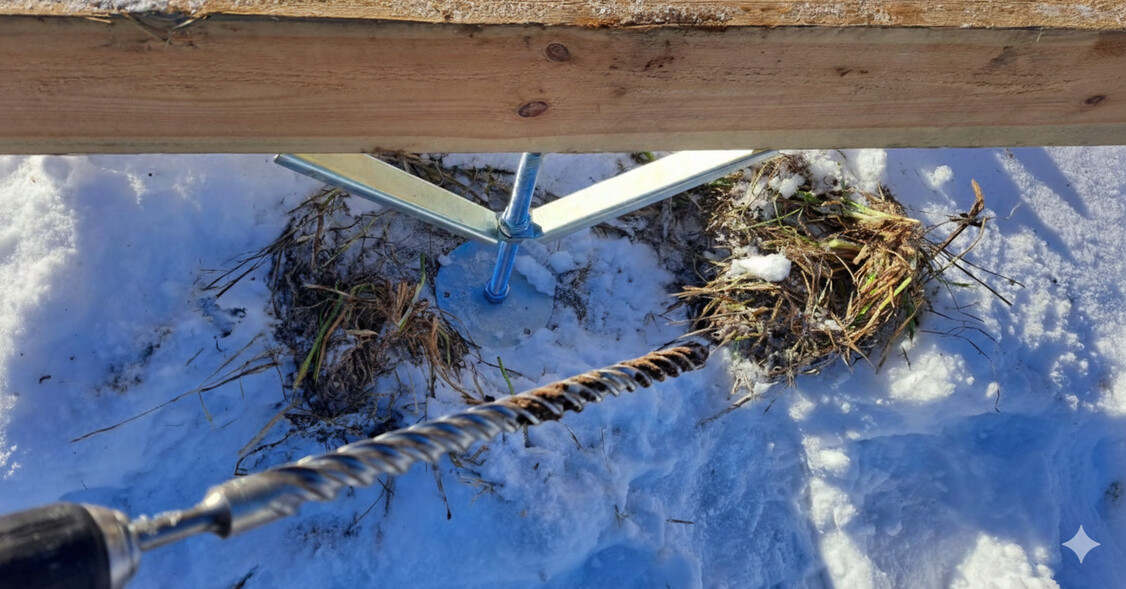
Building on Bedrock: Why Finding Rock is Actually Good News
Published on November 6, 2025
Note: This guide covers foundation installation on bedrock for small structures like sheds, cabins, and garden rooms. For residential construction, consult local building codes and engineers.
Every DIYer knows the sound. You’re digging a post hole, getting into a rhythm, and then—CLUNK.
The shovel vibrates up your arms. You scrape away the dirt, hoping it’s just a small stone, but it’s not. It’s bedrock. Or a boulder the size of a Fiat.
In the old days, this was a disaster. It meant renting a jackhammer or spending weeks trying to smash solid stone into submission just to pour concrete.
But here is the truth that experienced builders know: Solid rock isn’t an obstacle. It’s the best foundation you will ever have.
You just need to stop trying to remove it and start building on it.
The Strategy: Pin, Don't Pour
Rock is stronger than any concrete you can mix. The challenge isn't "strength"—it's connection.
How do you attach a flat metal base plate to a jagged, sloped, or uneven rock surface?
You need two things: Lateral stability (so the post doesn't slide) and Load bearing (so the base plate sits flush).
The Tool You Need
Do not try this with your standard cordless drill. You will burn out the motor in minutes.
You need an SDS+ Rotary Hammer Drill. If you don’t own one, rent one. You’ll also need a high-quality 22mm masonry bit (roughly 200-300mm long). This setup turns drilling rock from a nightmare into butter.
How to Get a Level Footing on Jagged Rock
The biggest mistake I see is people trying to balance the BASIS base plate on a "pointy" bit of rock. If the plate isn't sitting level and flush, the weight is concentrated on the threaded rod alone.
Here are the two ways to solve this:
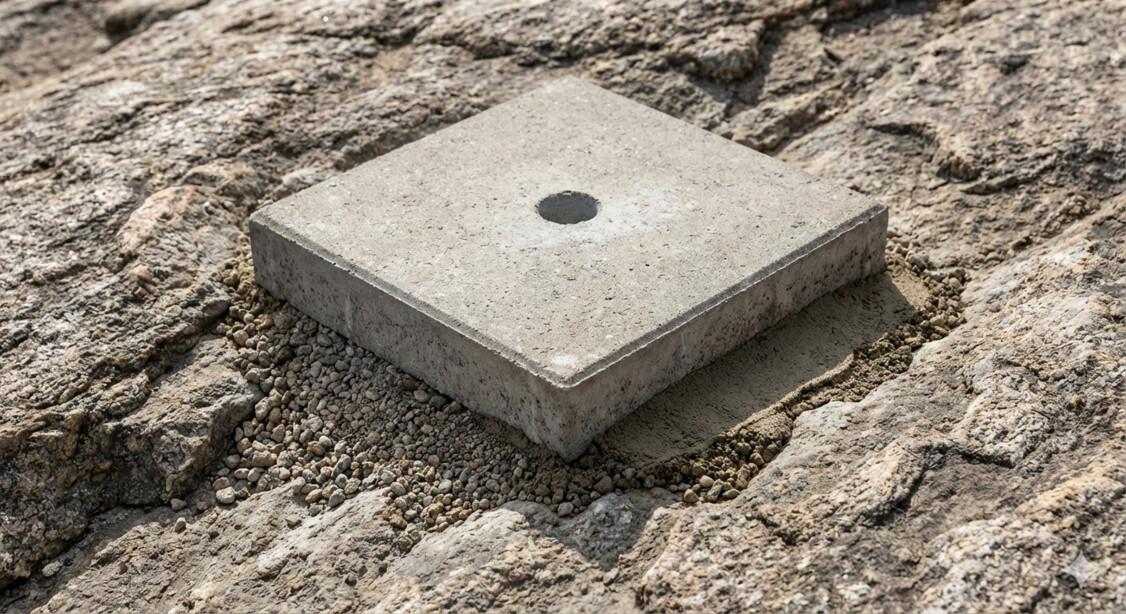
Option A: The "Paver Shortcut" (Easiest)
If the rock is relatively flat but just slightly uneven, the simplest solution is to use a standard concrete paver (30x30cm).
- Drill your 22mm hole into the paver as deep as necessary, going through it into rock if required.
- The paver acts as a "bridge," creating a flat, level surface for the BASIS base plate.
- If there is a gap under one side of the paver, use a little bit of dry-packed mortar or fine gravel to "bed" the paver so it doesn't rock.
Option B: The "Mini-Pour" (For Jagged Rock)
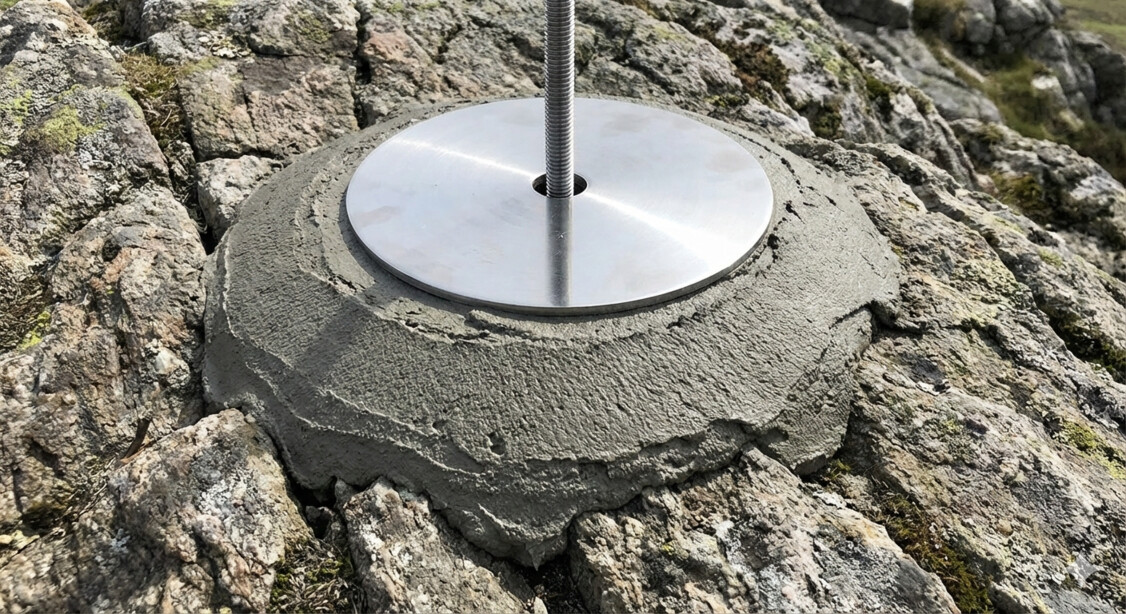
If the rock is very steep or jagged, you need to create a small, flat "landing pad" for the base plate.
- Drill your 22mm hole 10-15cm deep into the rock.
- Clean out the dust.
- Mix a small amount of rapid-set mortar and create a flat "pancake" (about 30cm wide) around the hole.
- While the mortar is wet, press the BASIS base plate down so it sits perfectly level and flush.
- The threaded rod goes through the mortar and into the rock hole. Once that mortar sets, that post is going nowhere.
The Step-by-Step Method
1. Mark Your Spot
Lay out your grid. Clear away the moss and soil so you can see the stone surface clearly.
2. Drill the Anchor Hole
Drill vertically into the rock, 22mm in diameter, about 10cm deep. Pro Tip: Keep the drill vertical even if the rock is sloped. Start slowly to create a divot so the bit doesn't "walk" across the stone.
3. Insert the BASIS Post
Drop the threaded rod into the hole. It's normal when it penetrates only 4-5cm if you are at the upper edge of the BASIS height range.
4. Level and Lock
Once the rod is pinned in the hole, you have total adjustability. Use a wrench to spin the nut and bring your timber frame to a perfect level.
The Bottom Line
Hitting rock doesn't mean your budget just doubled. It's actually great news for installing BASIS posts.
By drilling a simple hole and ensuring your base plate has a level surface to sit on, you’re using the earth’s own skeleton as your foundation. It’s faster, stronger, and permanent.
Dealing with a site that’s half rock, half swamp? That’s the beauty of adjustable foundations. You can mix and match methods. Check out our Gravel Pocket Guide for the soft bits of your garden.
Related: Understanding Adjustable Foundation Systems
Bedrock installation is one application of adjustable foundation posts. These posts also compensate for sloped ground, soft soil, and other challenging conditions.