Problem Solved

Sloped Ground Foundations

Level structures on slopes without excavation or retaining walls

The Challenge You're Facing

Slope requires either excavating to create flat ground, or building retaining walls and adding fill. Both require extensive site work, specialized equipment, and altered drainage patterns before foundation work can begin.

Excavation or retaining walls required to create level building pad
Heavy equipment access needed, which may damage existing landscaping
Natural drainage patterns disrupted, creating new water management issues
Site work extends project timeline by weeks before building can start
Permanent alteration to terrain—difficult to reverse if plans change
Settling or erosion after site work can compromise the foundation

How BASIS Solves This

BASIS posts adjust independently from 0 to 600mm to compensate for grade changes. Each post matches the existing ground elevation, creating a level platform without modifying the terrain.

Independent Height Adjustment

Each post adjusts separately to match ground elevation at that point. Set posts on natural grade, then adjust with a wrench until the frame is level.

No Ground Modification

Posts sit directly on existing grade with gravel pads underneath. No excavation, cutting, or filling required.

Preserves Natural Drainage

Elevated structure maintains existing water flow patterns. Ground slope continues to drain naturally beneath the building.

Readjust If Ground Shifts

If slope settles or erodes over time, adjust posts with a wrench. No excavation or foundation repair required.

Relocatable

If the site proves unsuitable or you need to move the structure, disassemble and reinstall elsewhere. Terrain remains unaltered.

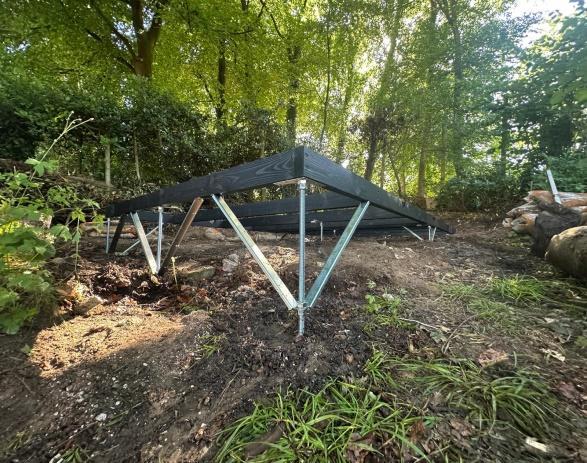
Sloped Ground Foundations

Perfect For:

  • Garden sheds on hillside properties
  • Saunas on sloped lots
  • Off-grid cabins on mountain terrain
  • Decks following natural contours
  • Workshops on uneven backyards
  • Equipment storage on grades
Starting at70.93 €per unit, VAT included

Traditional Methods vs. BASIS

See why BASIS is the superior choice for sloped ground

Traditional Methods
BASIS System
Ground Preparation
Excavate to create level pad, or build retaining walls with fill
Clear vegetation, place gravel pads at post locations
Equipment Required
Excavator or retaining wall construction equipment
Wrench and spirit level
Timeline
1-3 weeks for site work before foundation begins
Install posts and level frame in same day
Drainage Impact
Natural flow disrupted; new drainage system often required
Natural drainage preserved
Site Restoration
Permanent terrain alteration
Remove posts; ground returns to original grade
Future Adjustment
Requires excavation and foundation repair if ground shifts
Adjust posts with wrench

Technical Specifications

Built to handle your specific requirements

Height Range

0-600mm per post

Load Capacity

800-1400kg per post

Material

Hot-dip galvanized steel

Adjustment

Threaded collar, continuous positioning

Tools Required

Wrench, spirit level

Common Questions About Sloped Ground

What slope angle can BASIS accommodate?

How stable is this on a slope?

What if the slope continues to shift after installation?

Can I install on rocky or hard-packed slope?

Are permits required for sloped installations?

How many posts does a sloped site require?

What does this cost compared to excavation or retaining walls?

What Customers Say

From people who faced similar challenges

Anne🇪🇪
Verified Buyer

We had a 20cm slope and were unsure of the install. BASIS system made it incredibly simple and saved us thousands.

Ready to Solve Your Sloped Ground Challenge?

Compensate for slope without excavation. Adjust during installation and again later if ground shifts.